Ballet
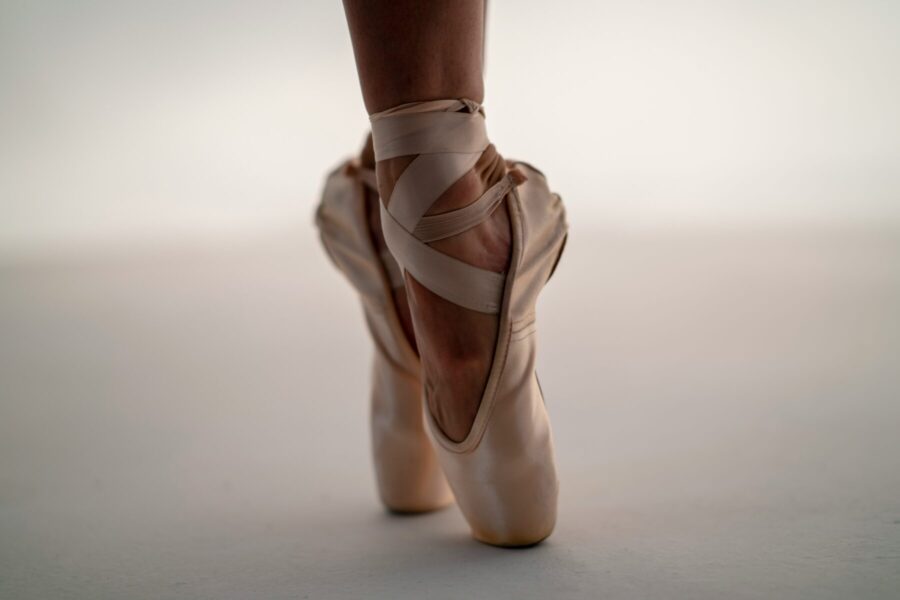
Last week a dear friend gave Nancy and me wonderful seats for the Boston Ballet’s performance of The Sleeping Beauty
Coincidentally, that same morning I had read I Corinthians 12.
Both experiences spoke to my soul about humility, self-control, God’s grace, and God’s glory.
Chapter 12 of I Corinthians has been a guiding chapter of Scripture for my leadership of Gordon-Conwell over the past seven years. Through the decades since its beginnings, the institution had both grown and grown apart. Having been a single campus in 1969, as time went on, it evolved to become four campuses, each competing for students, budget dollars, and the attention of donors. And, as often happens in families or institutions, differences in priorities, perspectives, and practices gradually developed.
In July of 2019, during my first month on the job, I read I Corinthians 12 at a meeting and declared we all need to have this mindset about the seminary: “One Gordon-Conwell.” We are one body with many parts. All parts are necessary for our healthy functioning and for our long-term future. “If one member suffers, all the members suffer with it; if one member is honored, all the members rejoice with it” (v. 26, NKJV).
I have expressed that this concept of being one body flows from the idea that “all boats rise together.” If the seminary does well, we will all do well. For the water to rise and raise us all, we must function as one, as a single body.
On the night of the performance, Nancy and I were encouraged to arrive plenty early to the Boston Ballet, which we did. We had front row seats that enabled us to watch the first musicians enter the orchestra pit and begin tuning their instruments and doing practice runs. One percussionist practiced light touches on the cymbals and reviewed his score. Trumpets and slide trombones added to the cacophony. The scene was at once chaotic and engaging, seeing this extremely talented pool of musicians focused on the music, while also briefly chatting with smiles and waves and nods as they greeted one another. Chaos, noise, relationships, and all facing one direction with a singular purpose.
The conductor, Mischa Santora, entered and about 2,670 people spontaneously applauded as he took the stand. He turned to acknowledge the applause, then turned again to face to his orchestra. He lifted his baton. Then silence. Focus. Each and every musician, previously engaged in chit-chat and random tuning checks, looked only at Mr. Santora. Then, with a mere flick of his wrist, that magnificent hall was filled with music as harmonious sounds permeated the nearly 100-year-old walls and pillars and, of course, our eardrums. It was a perfectly orchestrated event. Mr. Santora would look at the stage, confirming that the next dancer was in position, then he would look to his brass section as they, with eyes transfixed on him, made sure their part landed on queue and made their portion sing.
All eyes, at all times, remained fixed on the conductor. And with eyes so fixed, the previous chaos I had heard when I first took my seat, transformed into living art and beauty, and now was setting the stage for a story to be told on stage through the ballet.
I could have moved two seats over and tapped the conductor on the shoulder to tell him how much I was enjoying myself. I constrained myself, but I was that close. My eyes met the level of the stage floor; I could see the ballet slippers slide along the floor and could hear the tapping of the slippers against the wood surface as the dancers would pirouette or complete an assemblé (a jumping maneuver I myself only just learned about).
The performance came alive as the picture of many “body parts”: instruments and dancers all working in harmony toward a singular end. Individually, the clash of a cymbal would simply be just that—a disconnected noise. But perfectly timed, and in relationship with the other members of the orchestra, that noise became an integral part of a complex larger story, which—in the case of this ballet, hinted at a resurrection. In the story, the evil one, Carabosse, wants to kill the princess, Aurora (“dawn” or “morning light”), but, as we all know the princess merely “sleeps” 100 years and is resurrected by a kiss. The music and the dance—without using words—together told a mythical story with fairies and even “Puss in Boots.”
This kind of magic is possible only because each member of the orchestra was focused on the conductor. The musicians and dancers in sync and cooperation with one another, deferred to those with the leading roles, who took center stage to stand out. Everyone—whether in the orchestra pit or in the ballet company on stage—must exercise absolute self-control. The timpanist sits, waits, follows the score and plays infrequently, but beautifully—at just the right moment—accents a jump or a fall or an evil spell. The piccolo player could dominate the whole orchestra, but instead gently lends her high-pitched tones only at particular times and with a delicacy that seems almost imperceptible.
Focus, self-control, discipline, humility, eyes and ears fixed on the single goal—it sounds almost like the church bringing the story of the gospel and the glory to the nations. It is also a picture of the inner workings of Gordon-Conwell, where most people work behind the scenes in their own “orchestra pit” waiting patiently doing their work until, at the right time, they are called upon to write, speak up, plan, organize, and enjoy their moment to shine.
When the seminary or the church functions like a single body, as seen in I Corinthians 12, their efforts become like a ballet performance—harmonious, beautiful, disciplined, and focused—all to bring glory to God.
Serve the Conductor of your soul! Be part of bearing his Glory!
*
Take a moment to consider how this performance of Tchaikovsky’s music beautifully captures what it means to work together as one body.
 Dr. Scott W. Sunquist, president of Gordon-Conwell Theological Seminary, is author of the “Attentiveness” blog. He welcomes comments, responses, and good ideas.