Ex Fonte Excerpt: Pastor George (Herbert)
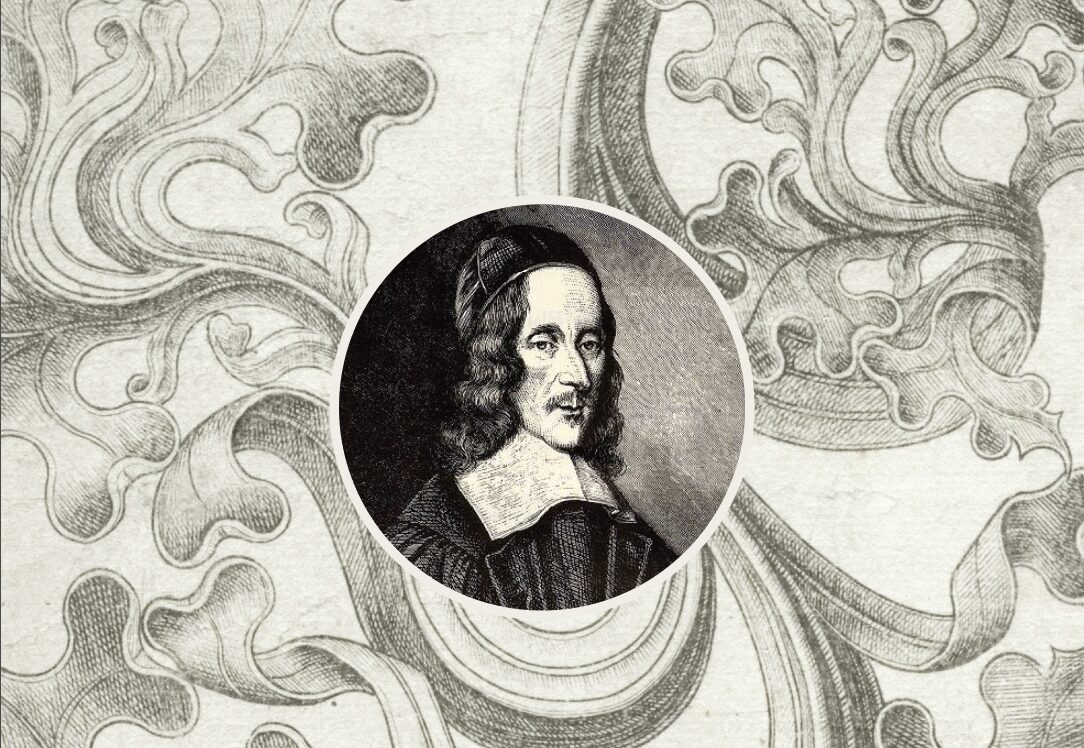
A seventeenth-century poet for a post-Christian age
Stephen Witmer
As a child, I experienced my first and only earthquake. The tremor lasted just a few seconds but rattled both the china cabinet and my family. Many years later, I helped with relief efforts after a major quake in Turkey that reduced homes and businesses to rubble. In an earthquake, everything you assumed was solid suddenly isn’t. What’s unstable crumbles.
If you’re a follower of Jesus Christ living in the twenty-first century, you can’t help but feel a similar sense of seismic activity underfoot. It’s not just that a few received opinions about God or humanity have changed. Rather, the assumptions and values underlying those opinions have shifted. Although Christianity flourishes in the Global South, much of the West has entered a post-Christian age. It’s now possible (and, for many, desirable) to imagine a world without God. For some, Christian institutions are deemed untrustworthy, even dangerous. Christian morality is thought oppressive and damaging.
Earthquakes affect all who live through them and the same can be said of our current cultural tectonic shifts. In our day, the church is scattering in varying directions. How might followers of Christ persevere and even flourish in a post-Christian age? Of course, clear thinking and cultural engagement are important, but we also require more holistic help. We need spiritual formation. We need wise shepherds to guide us through troubling times.
Pastor George
Here I commend to you a godly, gifted pastor and poet, George Herbert (1593–1633). His chronological and cultural distance might seem to make him a less-than-ideal shepherd for our contemporary moment. After all, there’s nothing in his writings about pressing issues such as social media, gender theory, or intersectionality. In his lifetime, the King James Version was the hot new Bible translation. The year he died, the Roman Catholic Church convicted Galileo Galilei of heresy for holding to a heliocentric universe.
And yet Herbert, through his poetry, has pastored me for years, offering challenge and consolation, leading me to know more of Christ. I’ve come to think of him as “Pastor George,” and I long for others to derive blessings from his work as I myself have. Here I offer four aspects of his life and work that make this early-modern poet an ideal shepherd for modern people in our post-Christian age.
He was a pastor and had a pastor’s heart
Although Herbert is remembered as a poet, that’s not mainly how he was known in his lifetime—his English poems were unpublished until after his death. In the final three years of his short life, he became an Anglican priest, serving the tiny parish of Bemerton and Fuggleston (near Salisbury, England). The farmers and manual workers of Bemerton knew him as the pastor who entered their homes, prayed with them and taught them, and visited the sick in the community.
That’s the heart of a spiritual shepherd.
His poetry transcends time and touches souls
Great lyric poetry, and Herbert’s in particular, speaks not just to our minds but to our whole selves. Through the shape of the poem on the page and the sounds and cadences of words, it engages our eyes, ears, and bodies. It taps into experience, memory, and emotion through the play of metaphor and simile. It thereby affects us in ways prose doesn’t.
Great spiritual poetry speaks to our longings, exposes our doubts and insecurities, and evokes our desires for transcendence. At times it delivers a gut punch. Sometimes it wipes away our tears. Although it doesn’t (and shouldn’t) make apologetic arguments for the truth of Christianity, it embodies and expresses the compelling coherence and joy-tinged gravity of the Christian story.
By probing the heart of the Christian story, Herbert’s poems have connected with the yearnings of many who reject it.
He shepherds his “flock” through poetry
Herbert didn’t see his pastoral work and poetry writing as separate vocations. In fact, his pastoral calling is the key to his poems, which he wrote not for the sake of self-expression, or for fame and fortune, but to serve and shepherd fellow struggling Christians. When he writes that he meant to “rhyme thee to good,” the “good” he intended was the spiritual advantage of his flock, his readers. This is seen in his poem, “Joseph’s Coat”:
Thrown down I fall into a bed, and rest:
Sorrow hath chang’d its note: such is his will,
Who changeth all things, as him pleaseth best.
For well he knows, if but one grief and smart
Sure it would carrie with it ev’n my heart,
And both would run until they found a bier
To fetch the body; both being due to grief.
One of Joy’s coats, ’ticing it with relief
To linger in me, and together languish.
He experienced and expressed weakness
Herbert’s poems open a door for fellow strugglers by expressing self-doubt, second-guessing, and frank admissions of sin and weakness. His spiritual experience encompassed devastating seasons. “Sometimes to hell I fall” (“The Temper [1]”). There were times when he grew “fierce and wild” (“The Collar”). Prayer could be a violent assault on God himself, an “Engine against th’ Almighty” (“Prayer [1]”).
George Herbert’s poetry is life-giving because Herbert the man was a healthy Christian. He worshiped God, treasured the gospel, loved people and, through his poetry, found a way through despair to a place of hope. For centuries, his poems have encouraged believers and intrigued unbelievers by evincing honest struggle, evoking longing and wonder, and embodying the beauty of a better story. These qualities make “Pastor George” an ideal shepherd for our post-Christian age.
Stephen Witmer (Gordon-Conwell, MDiv, ThM 2003) holds a PhD from the University of Cambridge. He is the lead pastor of Pepperell Christian Fellowship in Pepperell, Massachusetts, and cofounder of Small Town Summits. His book In All Things Thee to See: A Devotional Guide to Selected Poems of George Herbert (Crossway) was released in February.
 A longer version of this article appears in the current issue of Ex Fonte magazine. Purchase the individual issue.