Imitation

Recently I had the joy and wonder of observing older, teen-aged grandchildren inadvertently become role models for imitation by younger grandchildren (under nine): Playing dress-up, trying to play Monopoly like the big kids, and trying out new splash dives in the pool. I chose the words “joy” and “wonder” as careful descriptors of an automatic connection between cousins who see each other only once every year or two and who, despite the distance, innately default to “imitating” one another.
Imitation seems to be the natural way, which, from infancy, humans learn to speak, to smile, and to relate with others. Cultures, similarly, are formed by imitation as children and newcomers take their cues from other adults. When parents naturally take their plates to the kitchen sink after a meal it is more likely (though not assured!) that the children will follow their example. “Do what I do,” is a natural way of living and learning.
Our imitation of someone older, more experienced, or more mature offers an on ramp to grow and to explore new boundaries of learning. And, as we all know, learning and growing are some of the great joys in life. When we master a new concept, or, as a child, when we learn to crawl or walk, we smile; and those who are watching us “learn” also smile in automatic response.
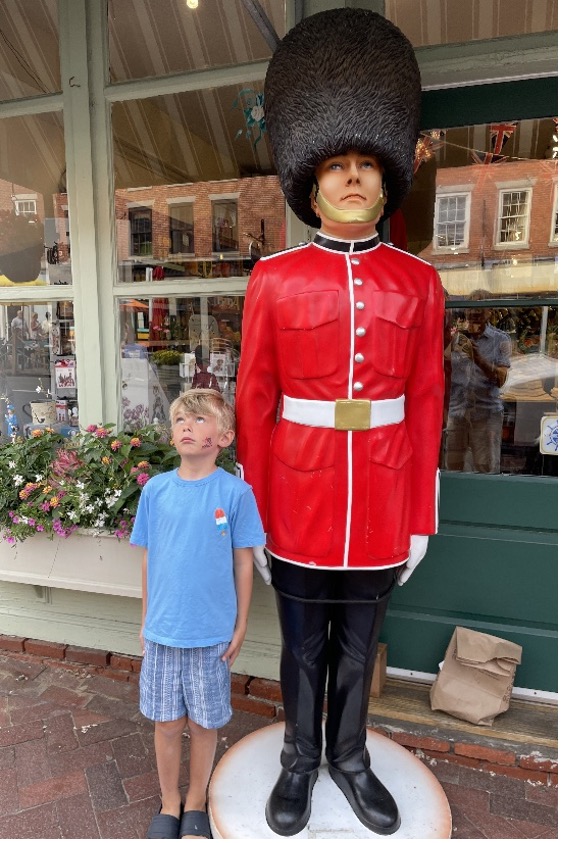
Imitation is a wholly (and holy) Christian concept. “Imitate me as I imitate Christ,” Paul says in I Corinthians 11:1. In Christ, this natural process of growing and learning is sanctified and will eventually become a means through which to bring about the conversion of cultures. Is this assuming too much? I don’t think so.
When a person comes into a new community, be it a church, school, or place of business he or she quickly intuits what is “appropriate” to that culture. Every culture invisibly shapes new members of that particular community. Not “imitating” the practices, speech, and habits of the culture may create a level of dissonance that throws equilibrium out of whack and needed adjustments will have to be made (such as leaving or being asked to leave). To be more blunt: good, ethical, moral, and civil culture has a hidden power to shape newcomers and to create pockets of culture that can drift either toward heaven, or toward being dragged down to greater depravity.
I remember visiting my mentor in his home and feeling like he made me a better person simply by virtue of the time I spent with him during those visits. His habit of praying for students, finding something to affirm in an otherwise inadequate first draft of a research paper, and even the care he showed for our children when they would join me, modeled a lifestyle that I find still guides my daily behaviors.
I also find that I understand the first letter of John much better after raising children and now watching grandchildren: “Dear friends, now we are children of God, and what we will be has not yet been made known. But we know that when Christ appears, we shall be like him, for we shall see him as he is” (I John 3:2). We are God’s children; he has adopted us into the very Godhead of the Trinity. As such we increasingly imitate his character as we spend more and more time with him. Eventually, we will become like him fully.
This is what is meant by the Imitatio Christi. Or we could consider the classic book of Thomas á Kempis, In Imitation of Christ or the well-worn bracelet with initials “WWJD” – What Would Jesus Do? It is a good question and worth pondering.
I am going to tell my grandchildren, the next time we are together, to work every day to imitate Christ in all they do and think. We could do a lot worse in an age and culture that glorifies self-absorbed “heroes.”
You know how we lived among you for your sake. You became imitators of us and of the Lord, for you welcomed the message in the midst of severe suffering with the joy given by the Holy Spirit. And so you became a model to all the believers in Macedonia and Achaia. (I Thessalonians 1:5b-7)
 Dr. Scott W. Sunquist, president of Gordon-Conwell Theological Seminary, is author of the “Attentiveness” blog. He welcomes comments, responses, and good ideas.