Walking with the Poor

A good friend and colleague passed away last week, on August 15. Bryant Myers was rated as one of the best and most loved professors at a theological seminary, though he himself had never been to seminary. He had become one of the most knowledgeable scholars of poverty and development, but he had never taken a course in economics, development, or poverty alleviation. Bryant earned a B.A. in chemistry and then four years later earned a PhD at UCLA in biological chemistry.
Though Bryant Myers was very bright, he had not been very motivated when he graduated from his PhD program at 27 years old. By his own admission, he was lost and developed bad habits to keep himself amused. His mother was concerned and when his father, with whom he had little in common, was “going up to the cabin,” she gave Bryant a Bible and said, “Just go with him and if you can’t talk about anything, read this.”
He did read and he was forever changed.
Upon returning he met with the local pastor at La Cañada Presbyterian Church, Rev. Dr. Gary Demarest, to try to understand what he had been reading. I recall that they met again, and again and again for weekly meetings for over a year.
Here I pause: Rev. Demarest was just doing his job, answering questions and teaching good theology to a bright 26-year-old. As is the case with all of us in the ministry, he had no idea that he was preparing a future champion in the alleviation of global poverty. In those meetings, he not only taught good biblical exegesis and theology, but he also found this wayward young man a job.
At the time Rev. Demarest served on the Board of World Vision in nearby Monrovia, California and soon he created the opportunity for his disciple to do volunteer work there. (Later Myers would become more involved working at the headquarters.) Quickly the leadership at World Vision realized that Dr. Myers was very gifted and could contribute much more. World Vision, in the 1970s, was going through a change from emergency interventions around Asia, to finding ways of alleviating poverty.
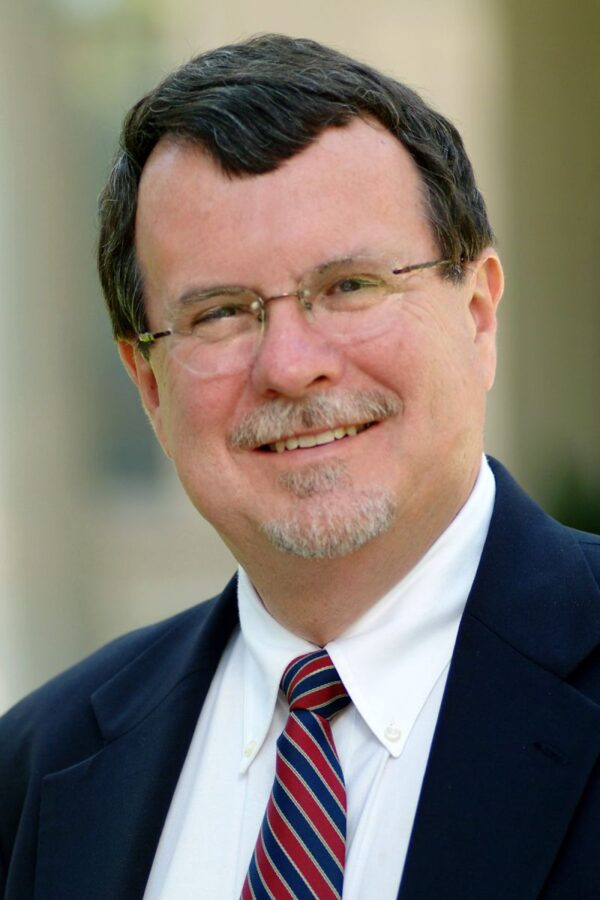
As Bryant described it to me over 10 years ago, he was sent all over the world to study the best work in poverty prevention and alleviation: What was being done? Who was doing it? Where did the money and ideas come from? What was the nature of relationships in the town or in the country? What were their religious beliefs?
This began his 30 years of working with the poor, or what he later called “Walking with the Poor,” as identified with his book of the same title.[1] Myers did not originate the phrase “transformational development,” but he made it standard vernacular among those who worked with the poor.
Myers was a true Renaissance man and global scholar. For example, the syllabus from his course “Globalization, the Poor and Christian Mission,” included some of the best and most recent books on economics, migration of people, population studies and mission work by Lamin Sanneh, C.K, Pahalad, Abjahit Banerjee, Philip Jenkins, Samuel Huntington, Robert Kaplan and (among others), Pankaj Ghemawat.
When, as dean at Fuller, I sat in on his class on Globalization and the Poor, I told him that the material was remarkable and he needed to write a book about it. He complained, “It takes a long time to write a book, Dean.” However, he applied for a sabbatical, spent time writing, and two years later he received the American Society of Missiology Award for Book of the Year for Engaging Globalization: The Poor, Christian Mission, and Our Hyperconnected World (Baker Academic, 2017).
Two insights have stayed with me when I remember Dr. Myers. He said, “Poverty is all about relationships,” and then would unpack how broken relationships increase poverty and how healed relationships—which begin with our relationship with God—bring about greater resources and human flourishing. A second insight I gained from him is how, later in his career, he talked about how Pentecostalism, although sometimes seeming other worldly and emphasizing spiritual experiences, actually cultivates human flourishing and pushes against poverty. He backed this up with hard data.
Bryant Myers was constantly reading, learning, asking questions, and quietly leading others. Of all the people I have known, he discipled and lifted up the most diverse group of people and he had the most diverse and most driven habit of reading and learning.
A former student of his said of him, “His teaching influenced his many, many students from all over the world. For me, when I had recently returned from overseas, his course was incredibly helpful as I processed my experiences in the developing world. His teaching was very balanced and he created space for students to explore many different perspectives.”
I am thankful to God for the discipling of World Vision’s Gary Demarest, and the work there he assigned to Bryant. I also give thanks for the attentive and humble spirit of my friend, Dr. Bryant Myers, the seminary faculty champion who had never himself been to seminary.
[1] Walking with the Poor: Principles and Practices of Transformational Development (Orbis Books, 1999 and 2011).
 Dr. Scott W. Sunquist, president of Gordon-Conwell Theological Seminary, is author of the “Attentiveness” blog. He welcomes comments, responses, and good ideas.