History’s Presence/Presents

We are what we remember.
Or, more accurately, we come to understand who we are and whose we are through what we remember.
The past shapes our present. Our history is present with us now.
As Christians, we know this is true regarding our salvation and identity in Jesus Christ. We are defined by his incarnation, life, suffering, death, resurrection, and ascension. As Paul so profoundly reminds us, “I have been crucified with Christ. It is no longer I who live, but Christ who lives in me.” (Galatians 2:20, ESV). I am defined by the past and the memory of the past. It is important to remember well!
By extension, this describes our lives every day; lives that are always remembering our loved ones no longer with us, and lives with new children coming along who hear the stories of the earlier generations. I believe the memory of Jesus can sanctify and redeem all our personal and family memories. For Jesus is the center of all of history, even family history.
This became very clear to me as I walked recently through our hallway at home and saw two sets of pictures. One part of the hallway had two pictures of our kids and their families (a total of 21 people), and next to these pictures were the school pictures of each of our 12 grandchildren. When I see these pictures, I am aware of who I am. I remember stories of raising children and living in different cities and homes. I remember the people and experiences that have shaped me.
The other set of pictures is of loved ones who have passed: sister, niece, father, mother, mother-in-law, father-in-law, and son-in-law. Sometimes I simply walk by, while other times I pause and remember. I remember a laugh, times at “the lake,” the kindness of my father-in-law, or the probing theological conversations I shared with my son-in-law. These memories are not only precious, but they are the way formative moments continue to shape me emotionally, spiritually, and intellectually.
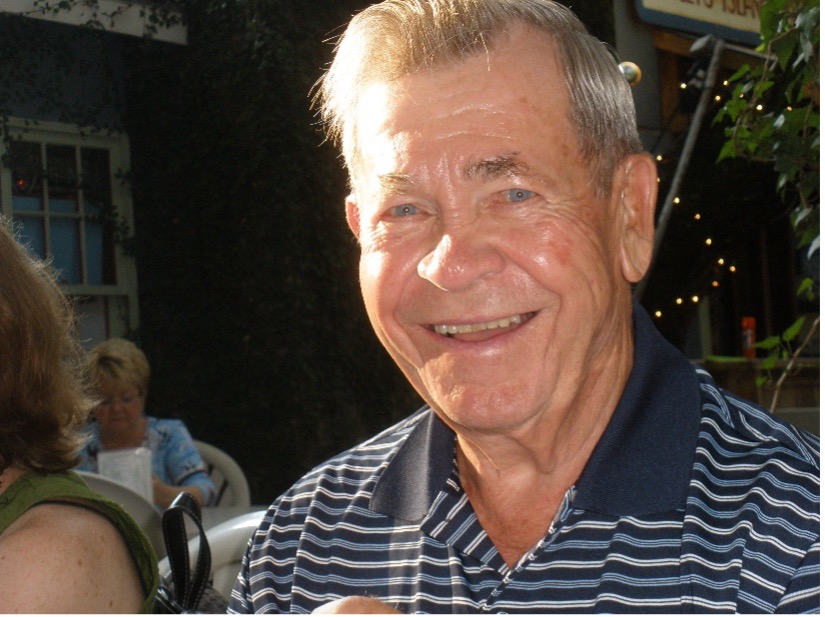
When I look at my father, I remember that he came from a very poor family that struggled for years. As a result, he felt it was his job to make people smile. Laughter was his intimate companion. “Glad you got to see me,” he would say when our guests would leave. If he didn’t know the answer to a question, he would often say (almost as a single long word), “Not-knowing-I-hesitate-to-answer-therefore-I-don’t-think-I’ll-reply.” My father discipled me, and his influence can still be seen in my sense of humor.
And then there are the close relatives who died too young. We see their pictures in our home and in our daughter’s home. Even though they were with us for much less time, the memories of them and their “presence” seem stronger. God uses even the memories of their luminous lives to shape my identity by reminding me of the sacredness of time, the fragility of life, and the depth of love.
I’m reminded not only of who I am through these people but of the God who has walked with me through every season and calls me his own. And so, I believe these memories need to be stewarded by God through his Holy Spirit. Why? Because memories can take on a life of their own. Memories can be buried by pain and suffering, and when this happens, we are robbed of the goodness of a lost life. Memories can also be romanticized and embellished by wishful thinking. When this happens, we are not living a real life but are escaping from who we (and they) really are. Memories need the rectification and purification of the Holy Spirit so we can remember accurately in order to know who we really are. The Spirit of the living God redeems all these memories.
The importance of remembering and reminding others is all over Scripture:
And when your children ask you, ‘What does this ceremony mean to you?’ then tell them, ‘It is the Passover sacrifice to the Lord, who passed over the houses of the Israelites in Egypt and spared our homes when he struck down the Egyptians.’ Then the people bowed down and worshipped. (Exodus 12:26–27, NIV).
We have behaviors, rituals, and habits that are rooted in the past. Israel was told again and again “remember” (zakar). In fact, over 200 times they are told to remember because their history had shaped them and it made them who they were. They were a people for God.
In essence, God is saying, “Don’t go back to Egypt. Don’t go back and submit to what is false. Don’t worship other gods. You are more important and infinitely more precious. Remember who you are: my beloved.”
Their remembering located them within God’s story, just as our remembering places us within the history and ongoing work of God’s grace in our own lives.
And so, I remember who I am and how I got here: the joys, the sorrows, and the ever-present grace. I also remember whose I am when I consider grace even in great loss, the God who remembers his people with perfect love.
It is true that we become more fully who we are as we take time to remember with tears and laughter the love of God who, as the Good Shepherd, has walked with me through the valley of the shadow of death, but has also anointed my head with oil, and so my cup overflows.
To God be glory through the generations!
 Dr. Scott W. Sunquist, president of Gordon-Conwell Theological Seminary, is author of the “Attentiveness” blog. He welcomes comments, responses, and good ideas.