Holy Tuesday: Symbols of the Suffering Servant – A Stone
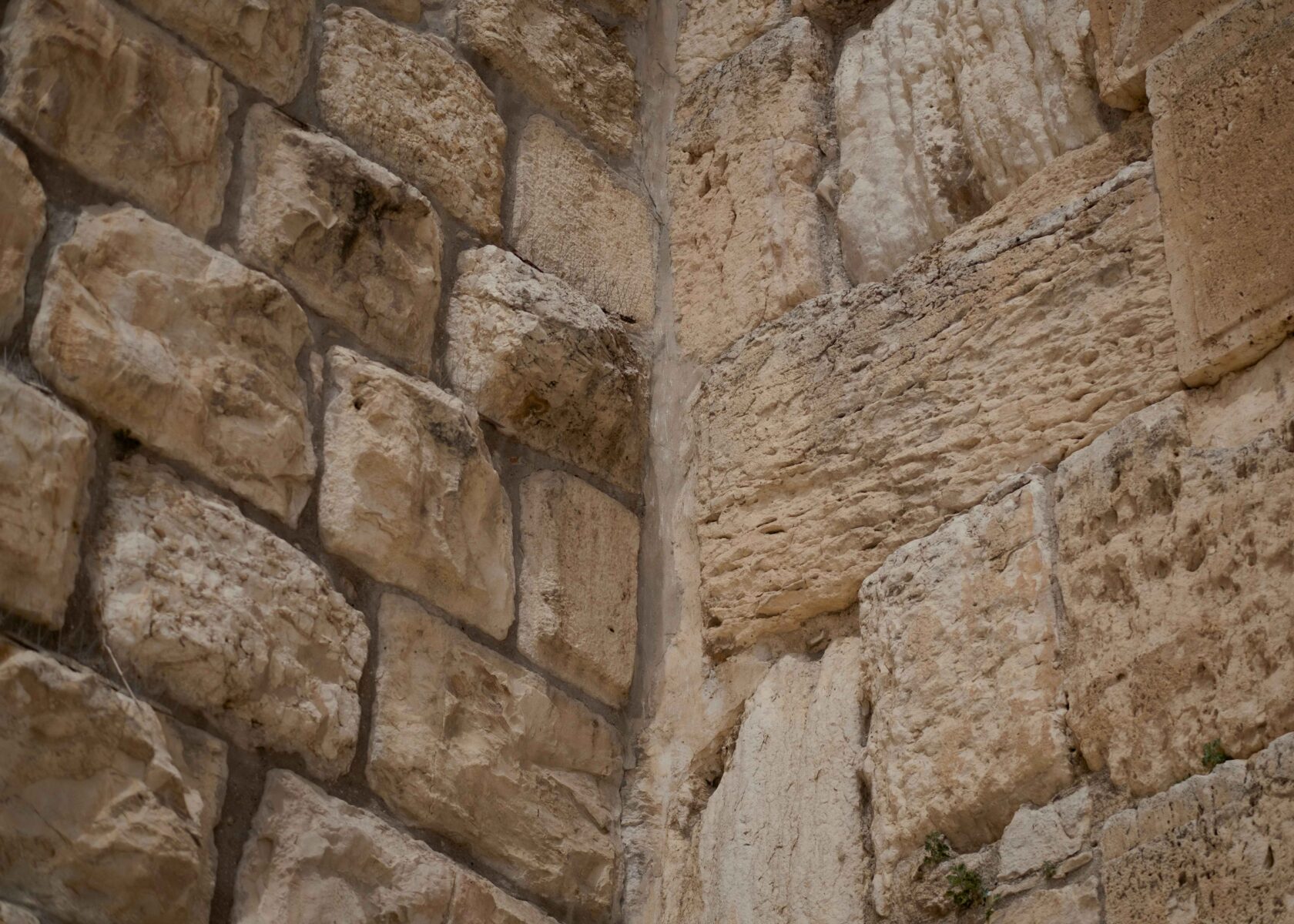
This blog is a part of our Holy Week series.
Dr. David Currie
Jesus then began to speak to them in parables: “A man planted a vineyard. He put a wall around it, dug a pit for the winepress and built a watchtower. Then he rented the vineyard to some farmers and moved to another place. At harvest time he sent a servant to the tenants to collect from them some of the fruit of the vineyard. But they seized him, beat him and sent him away empty-handed. Then he sent another servant to them; they struck this man on the head and treated him shamefully. He sent still another, and that one they killed. He sent many others; some of them they beat, others they killed.
“He had one left to send, a son, whom he loved. He sent him last of all, saying, ‘They will respect my son.’
“But the tenants said to one another, ‘This is the heir. Come, let’s kill him, and the inheritance will be ours.’ So they took him and killed him, and threw him out of the vineyard.
“What then will the owner of the vineyard do? He will come and kill those tenants and give the vineyard to others. Haven’t you read this passage of Scripture:
“ ‘The stone the builders rejected
has become the cornerstone;
the Lord has done this,
and it is marvelous in our eyes?’
“Then the chief priests, the teachers of the law and the elders looked for a way to arrest him because they knew he had spoken the parable against them. But they were afraid of the crowd; so they left him and went away.” (Mark 12:1-12)
The events of Holy Week were no surprise to Jesus. As opposition intensified after his Triumphal Entry on Palm Sunday, he clearly saw himself as God’s Suffering Servant and tried to give his followers and opponents a hint by telling a story—a story about some tenants who kill the son of the owner of their land. Jesus’ immediate targets were the religious leaders of his day, but we see ourselves in this story as well. Like them, we reject Jesus when he doesn’t seem to fit into our plans, throwing him away like a bogus building block.
But we see a hint of hope even in our rejection, as Jesus quotes Psalm 118:22: “The stone the builders rejected has become the cornerstone” (NIV). In God’s master plan, the stone rejected by us can also become the stone rejected for us! Jesus is rejected once and for all on the cross, so that none of our rejections need be final. The only final rejection is rejecting Jesus—the only one who can rebuild our relationship with God.
Moreover, we can accept that Jesus has been rejected for us, as well as by us, simply by echoing Isaiah 53:6: “We all, like sheep, have gone astray, each of us has turned to our own way; and the Lord has laid on him the iniquity of us all.”
That’s how Jesus pictured what was going to happen to him during Holy Week. Rejection on Good Friday was going to lead to Resurrection on Easter Sunday. “The Lord has done this, and it is marvelous in our eyes!” (v. 11)
David Currie, Ph.D. is dean of the Doctor of Ministry Program, Dean of the Anglican Formation Program, Professor of Pastoral Theology.
*
This post first appeared in the devotional, Journey to the Resurrection, published by Gordon-Conwell, April 14 – 21, 2019.