Cultural Separation, Incarnation, Kingdom
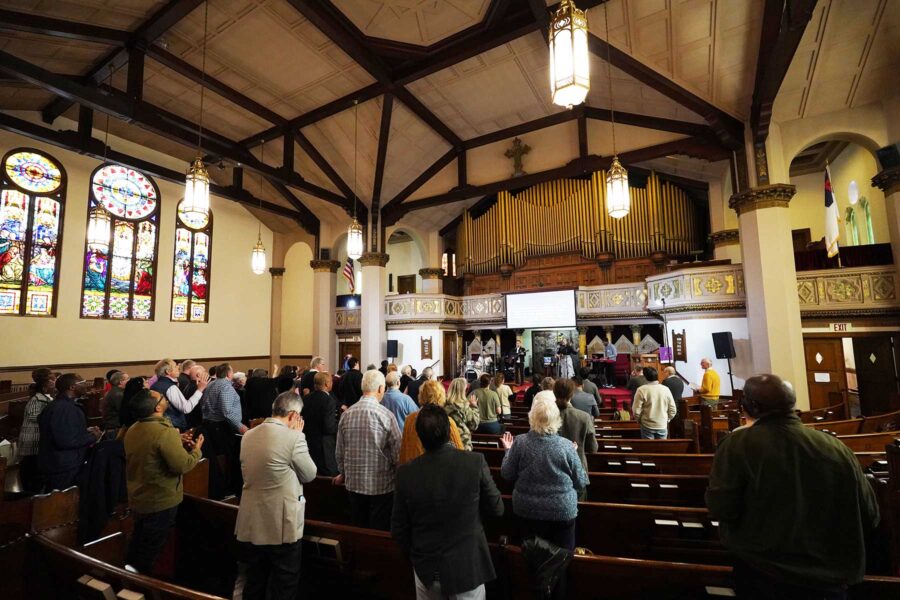
We all have a neighborhood we feel at home in, a church where the worship feels familiar, and friendships that feel effortless and comfortable. We know the customs, language, and humor of these people and places. We exhale. That instinct toward familiarity is deeply human, and it is not always wrong. But there is a question the gospel keeps pressing: when is it good for us to be with people like us, and when does that same instinct become something harmful, even sinful?
There are different types of social and cultural separation in America, and I believe Christians need to think biblically, theologically, and even eschatologically about this. There is suggestive separation, such as what a real estate agent may imply when asking if there are certain neighborhoods we would prefer to avoid. Then there are legal and semi-legal forms of segregation. We had “legal” (though unjust) segregation in the United States under the title of “Jim Crow” laws for about a century. Then there is “redlining” where certain services, such as house loans, are refused to certain people based upon race, ethnicity, or place of origin. Finally, there is segregation by choice: “We prefer to be with our own.”
While legal segregation and discrimination are rightly condemned, not every form of self-organized cultural community should be viewed in the same light. Such communities may reflect the “incarnational principle” of Christianity: Jesus and his life and teachings can be incarnated or translated into any language and culture.[1] In fact, if Christianity is not translated into specific cultures, it might otherwise become an oppressive, colonial, and foreign-imposed religion. The gospel can and must be translated into every culture. So some forms of voluntary association around shared language, culture, and history may be a good thing, enabling the gospel to be communicated and embodied within particular communities. In the United States, we can think of Korean-American churches, Chinese-American churches, Hispanic churches, and Black churches. Jesus is proclaimed and worshipped in the cultural forms and languages of each culture so that Jesus is communicated with clarity.
In this world, we encourage such diversity, but I suggest we always push toward greater unity among these diverse communities through events, institutions, and discipleship education. What do I mean by this?
First, I believe that local or regional events such as concerts, evangelistic meetings, lectureships, mission trips, and evangelical ecumenical worship services should always push to be more and more diverse (and therefore inclusive), focused on Jesus Christ who reconciles all (Col. 1:15-20).
Secondly, institutions like mission agencies, seminaries, Bible colleges, and evangelistic organizations should seek to reflect the global church, actively attempting to bring along a diverse sampling of races or ethnicities. At Gordon-Conwell, we seek to realize this because we believe that the gospel creates a diverse body in Christ and a rich environment for learning, though such diversity can also sometimes create tensions and misunderstandings. These are holy tensions that point to the struggle of the church laboring toward the New Jerusalem.
Finally, I believe our discipleship and teaching must include highlighting and learning about other cultures and how we can glorify Christ in fellowship with those from different churches and ethnicities. A few quick examples may help. Korean discipleship and social order, for example, differ from Western Enlightenment-types of discipleship. Korean discipleship often emphasizes communal prayer and relational accountability, whereas Western Enlightenment-influenced models often stress individual reflection and personal autonomy. African-American preaching and worship generally differ from most forms of Chinese or white Euro-American traditions. When we teach or disciple our students and congregations in counseling, preaching, worship, theology, and history, we need to be aware of how different cultures understand these same topics—and how that awareness can deepen and enrich our own faith.
In short, our sensibilities ought to lean toward or long for the Kingdom of Heaven on earth. For in heaven all the cultures of the world will be present, and they will be so absorbed by the love of Jesus Christ that the worship of the Lamb becomes a beautiful harmony of divine diversity.
After this, I looked and there before me was a great multitude that no one could count, from every nation, tribe, people and language, standing before the throne and before the Lamb. They were wearing white robes and were holding palm branches in their hands. And they cried out in a loud voice: “Salvation belongs to our God, who sits on the throne and to the Lamb!” (Rev. 7:9-10, NIV)
[1] This is expressed in this interview with Andrew Walls.
 Dr. Scott W. Sunquist, president of Gordon-Conwell Theological Seminary, is author of the “Attentiveness” blog. He welcomes comments, responses, and good ideas.